Fats: what they are, types (and what they are for)
Fats are important nutrients, as they provide energy for cells, regulate body temperature, absorb fat-soluble vitamins and act in brain development, controlling inflammation and forming hormones.
Regular consumption of unsaturated fats increases levels of “good” cholesterol, HDL, and decreases “bad” cholesterol, LDL, in the blood, reducing the risk of heart disease.
Also read: HDL cholesterol (good): what it is, what it is for and how to increase it
tuasaude.com/colesterol-hdl
Excessive intake of trans fat and saturated fat increases the levels of “bad” cholesterol, LDL, in the blood, favoring an increased risk of diseases such as atherosclerosis, Alzheimer’s and heart attack.
The 3 types of fat found in foods are:
1. Saturated fats
Saturated fats are a type of dietary fat that can be obtained from food and can also be produced by most cells in the body.
When consumed in excess, saturated fats increase levels of total cholesterol and “bad” cholesterol, LDL, in the blood.
Therefore, in excess, this type of fat favors the accumulation of plaque in the arteries and increases the risk of diseases such as heart attack, high blood pressure, atherosclerosis and stroke.
Foods rich in saturated fat: pork, chicken, eggs, beef and lamb, bacon, salami, sausage, mortadella, ham, milk, yogurt, butter, cheese and chocolates.
Saturated fat is also present in foods of plant origin, such as coconut, palm oil, cottonseed oil, olive oil and palm oil.
Recommended quantity: according to the WHO, the recommended intake of saturated fat per day is 10% or less of the total caloric value of the diet.
On an 1800 calorie diet, for exampleit is recommended to consume up to 20 g of saturated fat per day, which is equivalent to approximately 200g of grilled picanha.
2. Good fats (unsaturated)
Popularly known as good fats, the types of unsaturated fats are:
1. Monounsaturated fats
Monounsaturated fats, such as omega 9, are a type of unsaturated fat that help reduce the risk of cardiovascular disease.
Replacing saturated fat with monounsaturated fats helps reduce triglyceride and “bad” cholesterol, LDL, while maintaining or increasing “good” cholesterol, HDL.
Also read: 12 foods rich in good fats (and how to consume them)
tuasaude.com/gorduras-boas-para-o-coracao
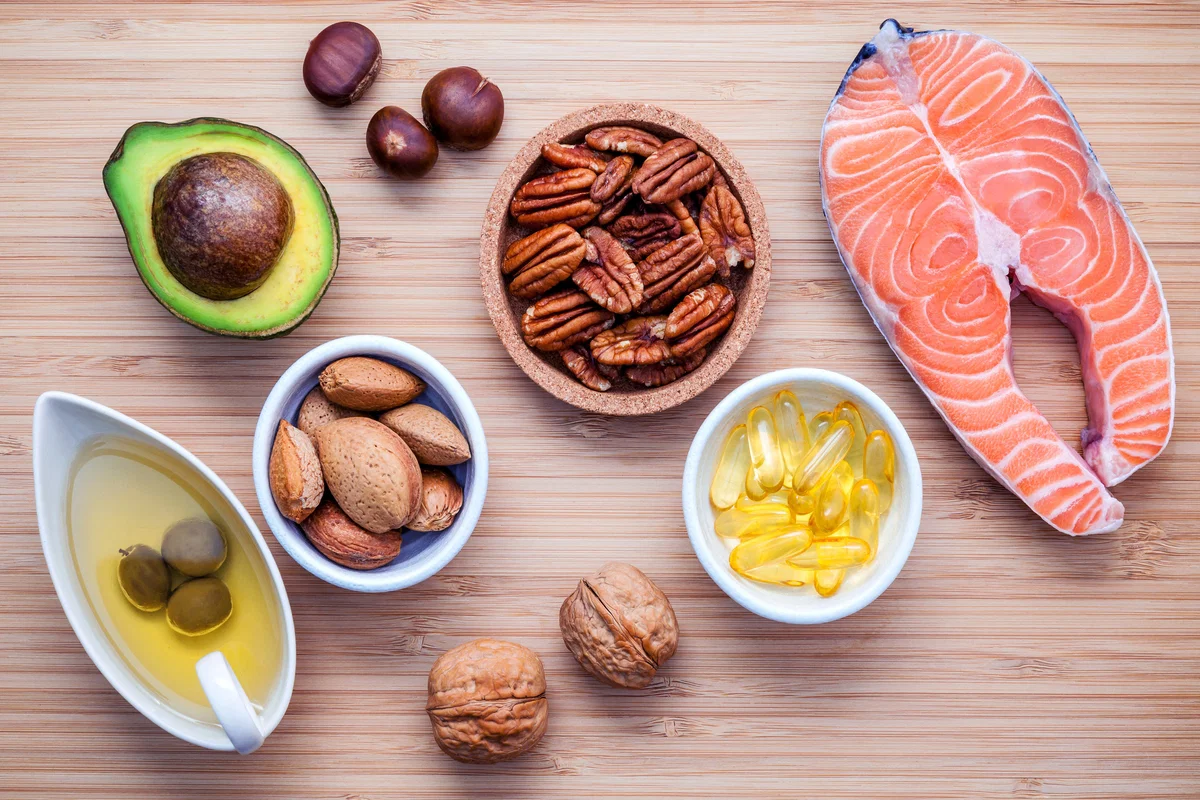
Foods rich in monounsaturated fat: olive oil, sunflower and canola oil, avocado, chestnuts, walnuts, almonds and peanuts.
Recommended quantity: there is no maximum amount of this type of fat indicated per day, it is only recommended that monounsaturated fat replace foods rich in saturated and trans fats.
2. Polyunsaturated fats
Polyunsaturated fats are fats that contain essential fatty acids, such as omega 3 and omega 6, which the body cannot produce, making it essential to obtain them through food.
This type of good fat has anti-inflammatory, antioxidant and anticoagulant action, which helps reduce inflammation, acts on brain development and reduces LDL cholesterol levels in the blood and the risk of heart disease.
Foods rich in polyunsaturated fat: They are found in fatty fish, such as sardines, salmon, herring, anchovies, tuna and trout.
In addition, polyunsaturated fats are also found in foods of plant origin, such as nuts, avocado oil and chia, sesame, flaxseed and sunflower seed oils.
Recommended quantity: There is no set daily limit for polyunsaturated fats. The orientation of health guidelines is that this type, as well as monounsaturated fats, are the main source of fats in the diet.
3. Trans fats
Trans fats are a form of unsaturated fat that has undergone changes in its chemical structure, causing it to behave in a very harmful way to the body.
This type of fat greatly increases levels of “bad” cholesterol, LDL, and also decreases “good” cholesterol, HDL, increasing the risk of cardiovascular diseases, in addition to being related to systemic inflammation.
Foods rich in trans fat: it is mainly present in ultra-processed foods, such as cakes, margarine-filled biscuits, ice cream, packaged snacks, frozen pizza and fast food-type meals.
Some natural foods, such as pork, beef, lamb, sheep and goat, milk, cheese and butter, also contain small amounts of trans fats.
Also read: Is trans fat bad? what is it and food
tuasaude.com/gordura-trans
Recommended quantity: The recommended amount of trans fat per day is up to 1% of the total caloric value of the diet. For a 2000 calorie diet, trans fat consumption should be up to 2 g per day.
Functions of fats
Fats are used to:
- Provide energy for the body;
- Absorb fat-soluble vitamins, such as vitamin A, vitamin K, vitamin D and vitamin E;
- Provide essential fatty acids that the human body cannot produce on its own;
- Act in the formation of various hormones;
- Fill fat cells and act as a thermal insulator, helping to keep the body warm;
- Act in brain development, control inflammation and regulate blood clotting;
- Help maintain healthy skin and hair.
Furthermore, in food, fats make meals tastier and help to prolong the feeling of satiety, controlling hunger.